NCC Sets 2020 for 5G Rollout in Nigeria
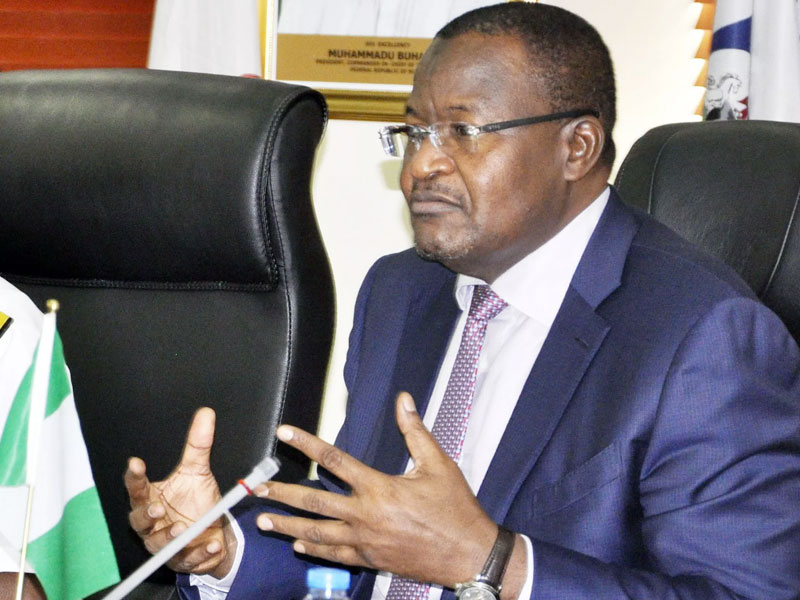 |
| Executive Vice Chairman of NCC, Prof. Umar Danbatt |
The Nigerian Communications Commission
(NCC) has said Nigeria would be ready to roll out 5G networks with the
26GHz, 38GHz and 42GHz spectrum bands by 2020.
The Executive Vice Chairman of NCC,
Prof. Umar Danbatta, said this in Abuja Thursday during a collaborative
meeting with GSMA for 5G rollout in Nigeria.
According to him, trial testing of the
rollout plan has commenced in the country beginning with the Eko
Atlantic Project, where broadband data will drive connectivity and allow
humans to interact with connected devices to check their health status
and remotely control home appliances without physical contact.
Danbatta acknowledged the deficit in
infrastructure rollout and spectrum availability in the country but
added that the NCC was already working to address the challenges.
He said NCC would begin with the available 26GHz, 38GHz and 42GHz to drive 5G rollout in the country.
Danbatta said, “NCC is already working
on the three key factors that will drive 5G deployments, which include
infrastructure, spectrum and regulation ahead of the 2020 rollout date.
“We will rely on existing policies and
regulation and still come up with additional policies and regulation
that will address any hiccups.”
Also speaking, the Head, sub-Saharan
Africa for GSMA, Mr. Akinwale Goodluck, said although Nigeria still
operates 2G and 4G networks, they will gradually give way for 5G as the
demand for 5G increases among the millennial, who are the digital
natives.
GSMA used the occasion of the
collaborative meeting to launch its latest report, which focused on
‘Spotlight on Nigeria: Delivering a Digital Future.’
According to the report, modernising
regulation and policy reform will be crucial to boosting Nigeria’s
digital economy and accelerating internet access for millions through
increased mobile broadband penetration.
GSMA research shows that the mobile
market in Nigeria makes an important contribution to the economy. The
mobile industry contributed $21 billion to GDP in 2017, representing 5.5
per cent of Nigeria’s total GDP.
In addition, the growth of Nigeria’s
digital economy resulted in the creation of nearly 500,000 direct and
indirect jobs, the report said.
Addressing the issue of spectrum to
drive 5G rollout, GSMA identified support for and release of harmonised
spectrum and a modernised licensing framework as fundamental building
blocks for Nigeria’s digital future.
The harmonisation of 1427-1518 MHz and
3.3–3.6 GHz makes them critically important bands for mobile operators
seeking to offer new mobile services to consumers and businesses. Making
these bands available for assignment to mobile operators will be a core
component in reinforcing Nigeria’s position as Africa’s leading mobile
market, according to GSMA report.
Speaking on connectivity, Goodluck said,
“Mobile connectivity has already improved the welfare of millions of
Nigerians, opening the door to new digital possibilities and powering
the country’s economic development.”
He added that for Nigeria to take full
advantage of the next phase of its digital transformation, it’s vital
that collaboration between industry and government enables the right
policy environment for millions more to benefit from ultra-fast mobile
broadband.
According to Goodluck, “If policies
don’t keep pace with the needs of society and technological innovation,
there is a risk that citizens will be left behind and productivity and
competitiveness will suffer.”
However, the report concludes that there
is still broad scope for Nigeria to increase its mobile penetration,
adding that although more Nigerians are getting access to mobile
broadband, the country lags behind regional peers in 4G adoption.
It said accelerating adoption of 4G would enable more advanced services and create bigger societal impacts.
The GSMA report pointed out that with increased spectrum harmonisation and licensing reform, the country’s mobile penetration is forecast to rise to 55 per cent of the population by 2025, with 70 per cent having 3G connectivity and 17 per cent having access to 4G networks.
The GSMA report pointed out that with increased spectrum harmonisation and licensing reform, the country’s mobile penetration is forecast to rise to 55 per cent of the population by 2025, with 70 per cent having 3G connectivity and 17 per cent having access to 4G networks.
Currently, only 44 per cent of mobile
subscribers in Nigeria are using 3G technology and four per cent are
using 4G technology, compared to over 18 per cent 4G penetration in
South Africa and 16 per cent in Angola.


Comments